.jpg)
Three contiguous neighborhoods, three completely different versions of Miami. Brickell hums at the pace of a financial capital. Edgewater wakes up to bay views and sleeps early. Wynwood doesn't sleep at all.
If you're moving to Miami — or already here and quietly debating your next lease — these three are almost certainly on your shortlist. They share a coastline, sit within a fifteen-minute drive of one another, and yet attract entirely different residents. Choosing between them is less about which is "best" and more about which version of Miami life you actually want to live.
Here's how a local thinks through it.
The quick verdict
Pick Brickell if you want walkability to a real urban core, after-work nightlife, and you don't mind paying for the convenience.
Pick Edgewater if you want bay views, a quieter pace, and a slightly better rent-to-lifestyle ratio than Brickell with similar proximity to downtown.
Pick Wynwood if your social life is your priority, you work in something creative or independent, and you want a neighborhood with personality over polish.
Below, the longer answer.
Brickell: Miami's Manhattan, for better and worse
Brickell is the financial district. High-rises, glass towers, rooftop bars, and a Walk Score that finally rivals the northeast. If you can live without owning a car in Miami, this is the neighborhood that makes that possible.
Who Brickell suits:
- Finance, law, and tech professionals who work downtown
- Couples without kids who want urban density and convenience
- International transplants who want a polished, predictable lifestyle
- Anyone who values walkability above everything else
The vibe: Polished, fast, expensive, social. Brickell feels like Miami's idea of a real city — which is to say, it has the density and amenities of a major urban center, but with palm trees and rooftop pools. Mary Brickell Village and Brickell City Centre give you grocery, gym, restaurant, and shopping access without ever crossing the bay.
Rent reality: A one-bedroom in Brickell averages roughly $3,200 to $3,600 per month in 2026, depending on the building and the view. Newer towers with full amenity packages run higher; older condo conversions are where you find the better deals.
The honest downsides: Traffic on the Brickell Avenue corridor at rush hour is a national-class problem. The neighborhood skews young-professional and can feel monotonous if you're not part of that demographic. Building amenities are spectacular and the streets, by Miami standards, are functional — but the neighborhood energy mostly happens inside buildings, not on sidewalks.
Edgewater: The rising bayfront alternative
Edgewater sits just north of Downtown and just south of the Design District, hugging Biscayne Bay. It's the neighborhood Brickell was a decade ago — high-rise condos going up faster than infrastructure can keep pace, but with views, water access, and a price tag that's still slightly more forgiving.
Who Edgewater suits:
- Young professionals and couples who want Brickell's amenities at slightly lower rent
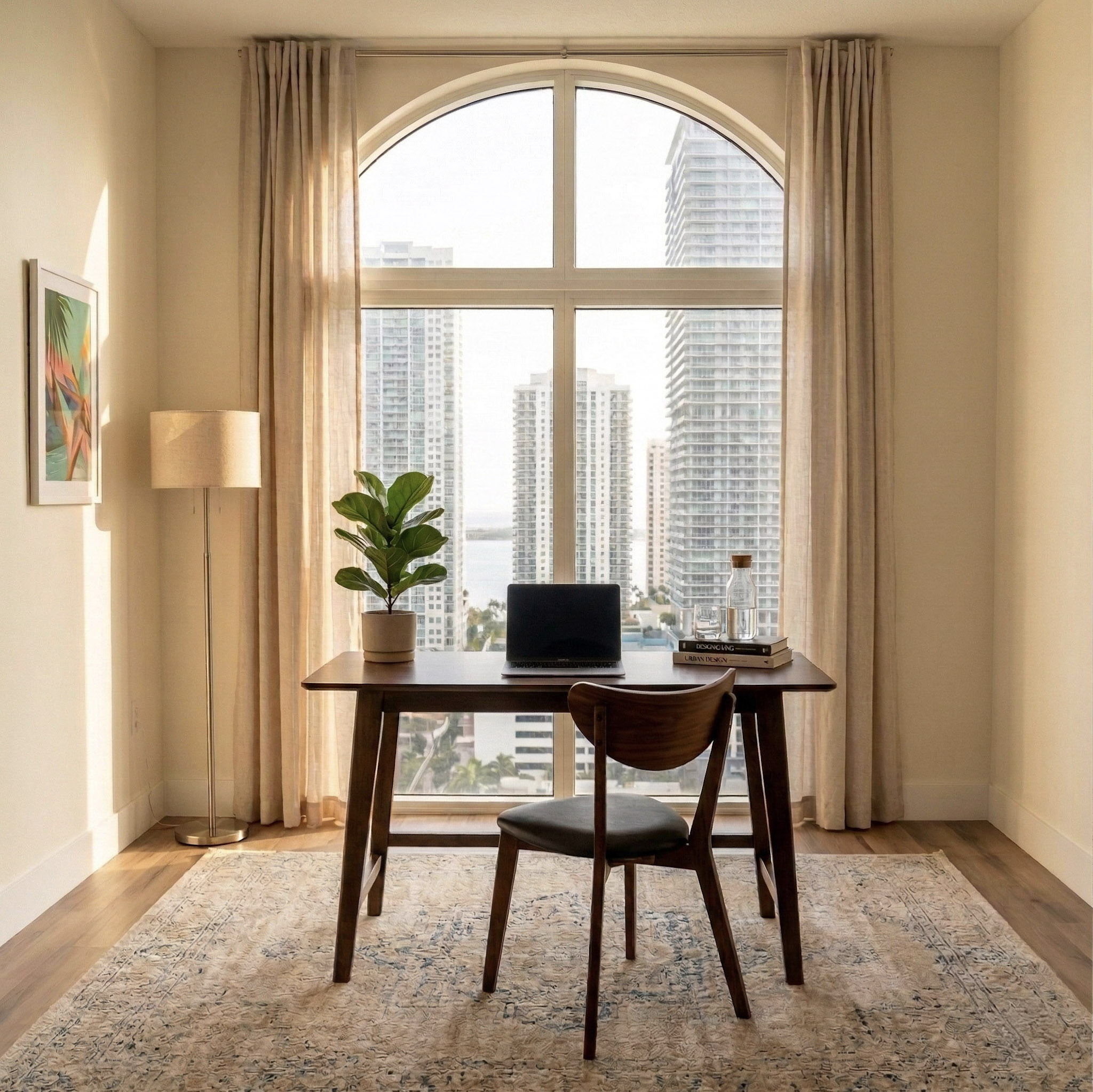
- Remote workers who want bay views from a home office
- Families looking for quiet residential energy with urban access
- Anyone prioritizing waterfront living over a dense walkable core
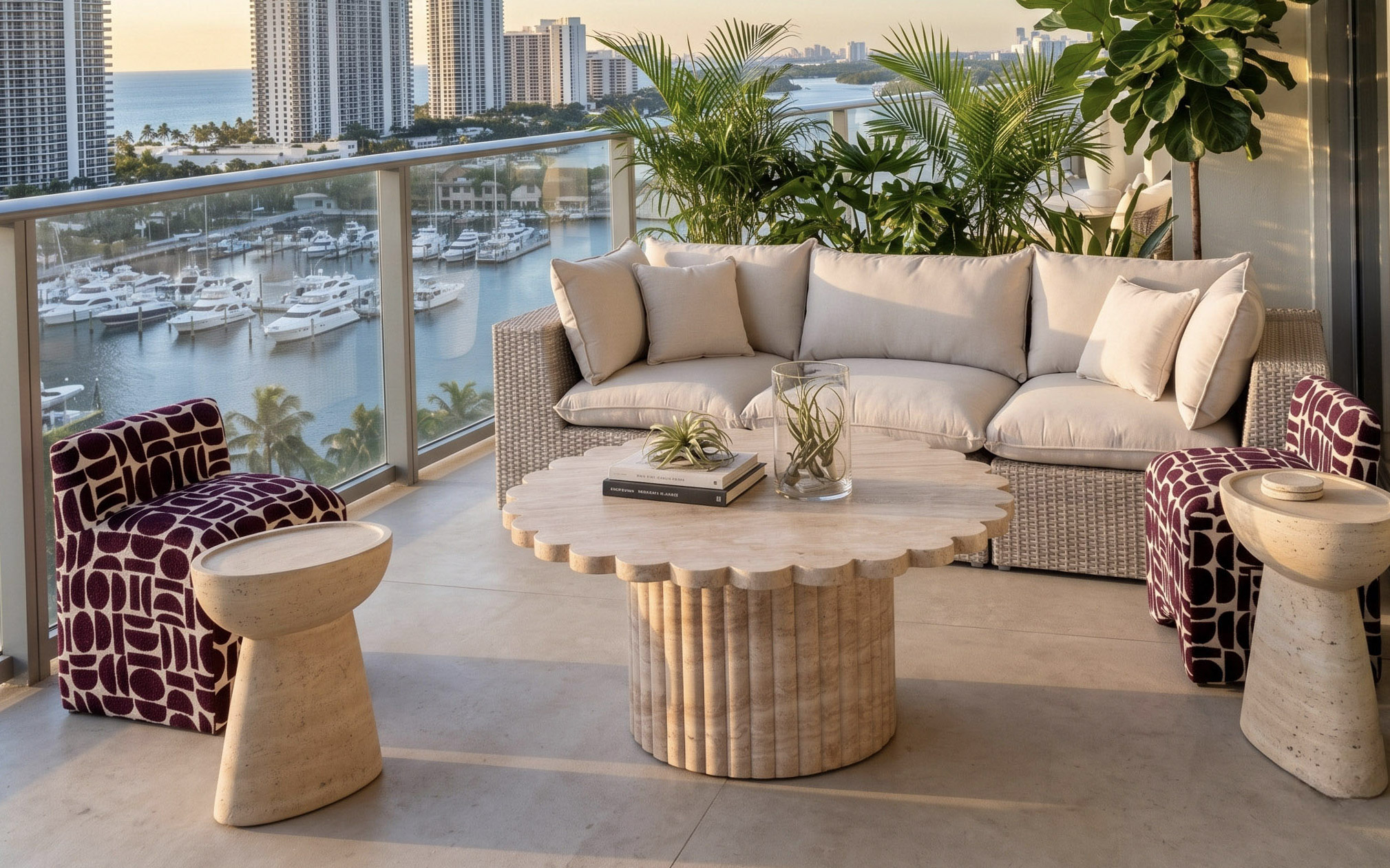
The vibe: Quieter than Brickell, more residential, more spacious. Margaret Pace Park is a real amenity — a waterfront stretch with tennis courts, a basketball court, dog park, and a baywalk that connects most of the neighborhood. The energy is genuinely different from Brickell: lower-key, more domestic, with sunsets over the bay that no other Miami neighborhood can quite match.
Rent reality: A one-bedroom in Edgewater averages around $3,200 per month in 2026, with the broader average across all unit sizes pulling closer to $4,600 once you include larger units in newer buildings. Studios run roughly $2,100. The premium over Wynwood is real, but the gap with Brickell has narrowed.
The honest downsides: Walkability is uneven. The bay-facing stretches are pleasant; the Biscayne Boulevard side is loud and pedestrian-hostile. Grocery and dining options are improving fast but still lag Brickell. If you don't have a car, you'll feel the gap.
Wynwood: The neighborhood with the most personality
Wynwood is the art district — murals, galleries, breweries, third-wave coffee, and a nightlife scene that has redefined Miami's cultural center of gravity over the last decade. It's the most distinctive of the three, and the one residents either love unconditionally or find exhausting after a year.
Who Wynwood suits:
- Designers, artists, marketers, founders, and creative-class workers
- People in their twenties and thirties whose social life is their priority
- Anyone who wants a neighborhood with character over polish
- Remote workers who'll spend their days in cafes and breweries
The vibe: Loud, art-forward, social, occasionally overwhelming. Wynwood is what Brooklyn was twelve years ago — gentrifying fast, still real, with a density of restaurants and creative spaces per block that no other Miami neighborhood touches. The murals are not a marketing gimmick; the entire neighborhood functions as an outdoor gallery.
Rent reality: A one-bedroom in Wynwood ranges from roughly $2,000 to $3,500 per month in 2026, with the broader market average sitting around $3,425. The range is wider than Brickell or Edgewater because the neighborhood mixes older industrial-conversion lofts with brand-new luxury developments. Studios start around $2,150.
The honest downsides: Wynwood weekends are loud — really loud — if you're near 2nd Avenue. Grocery options are improving but still limited. Parking is genuinely hard, even in resident garages. The neighborhood is gentrifying quickly, which means the energy you move for in 2026 may not be the same energy in 2029.
How to actually choose
The decision usually comes down to three honest questions.
1. What does your weekday look like?
If you walk to an office downtown, Brickell wins. If you work from home and want bay views from your desk, Edgewater. If you want to write from a coffee shop surrounded by art, Wynwood.
2. What does your weekend look like?
If your weekends are restaurants, gym, and a rooftop drink with friends, Brickell. If they're walks along the bay and slower mornings, Edgewater. If they're galleries, breweries, and a 2 a.m. tail end, Wynwood.
3. What are you willing to give up?
Brickell gives you density at the cost of green space and quiet. Edgewater gives you bay views and calm at the cost of walkability and dining variety. Wynwood gives you culture and energy at the cost of sleep and parking.
There's no wrong answer. There are just very different versions of right.
A note for renters who aren't sure yet
If you're moving to Miami without having lived here before, the temptation is to pick the neighborhood that looks best on a tour and lock in for a year. The locals' advice is the opposite: assume you'll want to move within twelve months. Take the lease that gives you the most flexibility, furnish it in a way you can walk away from, and use the first year to actually figure out which version of Miami fits.
A lot of newcomers start in Brickell because it's the safest, most predictable choice. Many move to Edgewater for year two when they realize they don't actually need to walk to a financial-district office. A meaningful number end up in Wynwood once they figure out where their friends actually live.
This is the case for renting furniture for the first year, not buying it. The cost of being wrong about a neighborhood is high enough on its own; the cost of being wrong and moving a sectional you bought is much higher.
Frequently asked questions
Which neighborhood has the best walkability — Brickell, Edgewater, or Wynwood?
Brickell is the most consistently walkable, with grocery, dining, and entertainment all within a fifteen-minute walk of most buildings. Wynwood is highly walkable within its core but limited outside it. Edgewater is mixed — pleasant along the bay, less so along Biscayne Boulevard.
Is Brickell or Edgewater cheaper?
Edgewater is slightly cheaper for one-bedroom units in 2026, with averages around $3,200 against Brickell's $3,200–$3,600 range. The gap closes in newer luxury buildings. Edgewater's larger units are often a better value than equivalents in Brickell.
Is Wynwood safe to live in?
Wynwood is safer now than it was a decade ago and continues to improve. Newer buildings come with full security and resident-only access. The main considerations are noise on weekends and parking, not safety.
Do I need a car in any of these neighborhoods?
You can absolutely live without a car in Brickell. You can manage without one in Wynwood with some friction. In Edgewater, most residents have a car — the neighborhood is designed around them.
Which neighborhood is best for remote workers?
Edgewater for the views and quiet. Wynwood for the cafes and creative energy. Brickell for the variety of co-working options and the easy social life after work. The right answer depends on whether you work better in calm or in conversation.
Which neighborhood has the best long-term value?
Edgewater is the rising market — newer construction, improving infrastructure, and meaningfully more bay-view inventory coming online. Brickell is the most established and the most likely to hold value. Wynwood is a higher-variance bet — appreciating fast in some pockets, plateauing in others.
The honest bottom line
These three neighborhoods are the closest thing Miami has to a true rental decision tree. Brickell is the polished default, Edgewater is the rising bay-view alternative, Wynwood is the cultural choice. None of them are wrong; all of them are very different.
The smart move for any new Miami renter is to optimize for flexibility in the first lease. Pick the neighborhood that fits the version of you that exists today — and keep your furniture, your commitments, and your options light enough to let the next version pick differently.
Furnishing the apartment, not the guesswork
If you're still figuring out where you'll be twelve months from now, GROVI furnishes apartments across all three neighborhoods and beyond with delivery, assembly, and pickup included — so the decision to move never gets held back by the furniture.