The great frustration of renting is the feeling that the apartment isn't really yours — white walls you can't paint, fixtures you can't change, a floor plan you didn't choose, and a landlord's deposit hanging over every decision. But a rental can feel every bit as much like home as a place you own, and almost none of it requires permission, tools, or risking your deposit. The trick is knowing which changes deliver the biggest feeling-of-home for zero permanent alteration.
This is the complete guide to making a rental feel like home without losing your deposit — the renter-friendly, damage-free, take-it-with-you upgrades that transform a generic unit into a place that's unmistakably yours. Written with Miami's rentals in mind (tile floors, white walls, high-rises), but the playbook works anywhere you rent.
The one-line answer
The things that make a space feel like home are almost all things you bring to it, not things you build into it: furniture, lighting, textiles, plants, and art. Focus your energy (and budget) on those movable layers — the ones that follow you to the next place — and use damage-free methods for anything attached to the walls or floors. You'll get a home that feels completely yours and a deposit that comes back in full.
Start with the furniture (it matters more than the walls)
Renters obsess over the walls they can't paint and underrate the furniture they fully control — which is backwards. Furniture is the single biggest driver of whether a space feels like home, and it's entirely yours to choose.
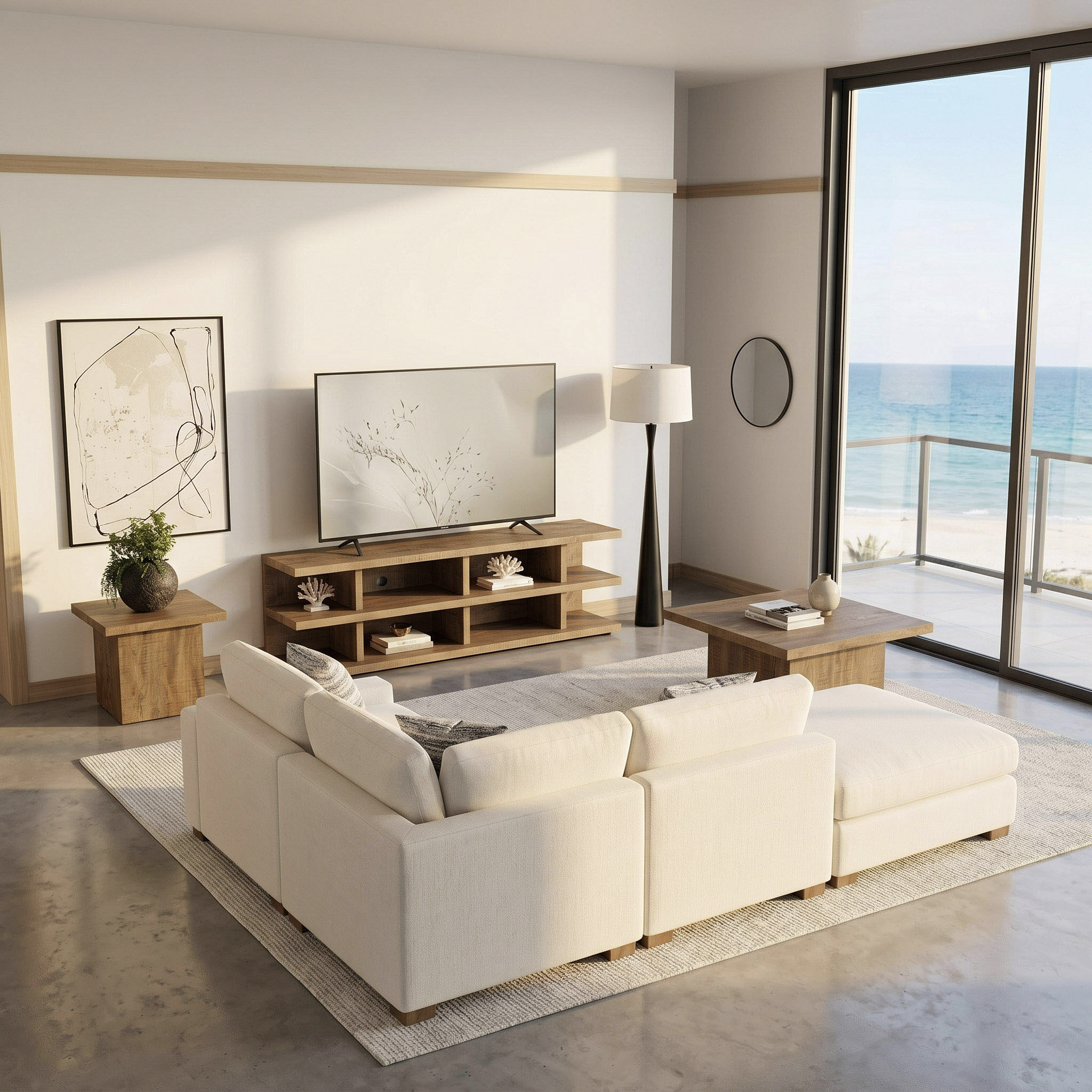
Furniture is the personality of the room. A generic white-walled apartment with a beautiful sofa, warm wood pieces, and considered lighting feels like a home. The same apartment with mismatched hand-me-downs feels like a waiting room, no matter what you do to the walls. Before you worry about anything attached to the building, get the furniture right.
It's the layer that moves with you. Everything you invest in furniture follows you to the next apartment — unlike paint, unlike built-ins. That makes it the highest-return decorating money a renter can spend.
Renting the furniture makes this even easier. If buying a coordinated, design-led set feels like too much upfront cost or commitment for a place you won't stay in forever, renting furniture solves exactly that — a designed, cohesive home delivered and set up in days, taken away when you move, with no capital tied up. It's the most renter-native way to make a rental feel designed rather than default.
Fix the lighting (the fastest transformation there is)
Rental lighting is almost universally bad — one harsh overhead per room, cool-white builder bulbs, and nothing at human level. Fixing it is the single fastest way to make a rental feel warm and homey, and none of it touches the building.
Swap the bulbs — the cheapest upgrade in decorating. Replace every cool-white (4000K+) builder bulb with warm-white (2700K) bulbs. Under $50 for a whole apartment, five minutes of work, and it single-handedly shifts the space from "office" to "home." Keep the originals in a bag to swap back when you leave.
Add lamps at human level. The reason rentals feel institutional is that all the light comes from the ceiling. Add a floor lamp beside the sofa, two bedside lamps, a table lamp on a console — light at eye level and below is what makes a room feel intimate and lived-in. All plug-in, all portable.
Dim everything. Smart bulbs or plug-in dimmers let you drop the light in the evening, which instantly makes any room feel cozier. They move with you and require no wiring.
The full framework is in our apartment lighting playbook — but even just the warm-bulb swap plus two lamps will transform a rental.
Dress the walls without damaging them
The walls are where renters feel most stuck — but there's a whole toolkit for personalizing them with zero holes and zero deposit risk.
Damage-free hanging hardware. Command strips and hooks, and similar removable adhesive systems, hold art, mirrors, and even shelves, then peel off cleanly. For heavier or gallery-wall arrangements, they've become good enough that most renters never touch a nail. (Test on your specific wall texture first — Miami's textured/knockdown walls can be trickier than smooth drywall.)
Peel-and-stick everything. Removable wallpaper, peel-and-stick tile (for a backsplash or an accent), and removable wall decals let you add color, pattern, and texture to a feature wall and peel it all off at move-out. A single accent wall of removable wallpaper transforms a room.
Lean art instead of hanging it. Large framed pieces leaned against the wall on the floor, on a console, or on a picture ledge (hung with damage-free strips) look intentional and gallery-like, with zero holes.
Mirrors to open up the space. A large leaning mirror makes a small or dim apartment feel bigger and brighter — especially valuable in Miami's smaller high-rise units — and requires no wall damage at all.
Textiles as soft walls. A large tapestry, a hung textile, or even floor-to-ceiling curtains (mounted on a tension rod or damage-free brackets) add color and soften a hard, echoey rental.
Solve the floors (especially over tile)
Most Miami rentals have tile floors — practical for the climate, but hard, cold-looking, and echoey. Renters can completely change the feel of the floor without touching it.
Rugs are the number-one floor fix. A properly sized rug over tile instantly warms the room, absorbs sound, adds softness and color, and defines zones in an open plan. It's arguably the highest-impact single thing you can add to a tile-floored rental.
Layer rugs for depth. In living rooms and bedrooms, a smaller textured or patterned rug over a larger neutral one adds the kind of layered warmth that reads as "designed."
Runners for the hard-working paths. A runner in an entry, hallway, or galley kitchen softens the walkways and adds a welcoming touch the moment you walk in.
Bring in plants (life changes everything)
Nothing makes a space feel alive and cared-for like plants, and in Miami's light they thrive. Plants are the fastest way to make a new, empty-feeling rental feel settled and personal.
Start with the unkillable ones. Snake plants, pothos, ZZ plants, and monsteras tolerate neglect and varied light — ideal for renters, travelers, and anyone who isn't a devoted gardener. A few large plants do more than many small ones.
Go big for impact. One large floor plant (a fiddle-leaf fig, a bird of paradise, a big monstera) anchors a corner and adds height and life the way a piece of furniture does.
Use plant stands and hangers (damage-free). Floor plants, plant stands, and tension-rod or freestanding plant setups add greenery at multiple heights without drilling. Miami's balconies are perfect for building a green buffer, too.
Faux plants have also gotten genuinely convincing if you travel too much for the real thing — no judgment.
Layer in the soft stuff and the personal
Once furniture, lighting, walls, floors, and plants are handled, the finishing layers are what make a home feel like your home specifically.
Textiles add warmth and personality. Throw pillows, a chunky throw over the sofa, layered bedding, curtains — soft textures are what make a room feel cozy rather than staged. They're cheap, easy to swap seasonally, and completely portable.
Curtains make windows (and rooms) feel finished. Mounting curtains high and wide — on a tension rod or damage-free brackets — makes windows look bigger and the whole room feel more intentional than the bare blinds most rentals ship with. In Miami, blackout layers also solve the intense early sun.
Scent is the invisible half of "home." A candle, a diffuser, or fresh coffee — scent is a powerful, instant trigger for the feeling of home that most people forget to design for.
Display the personal. Photos, books, travel objects, ceramics, things with a story — the layer that makes a space unmistakably yours rather than a well-decorated showroom. Open shelving, console tops, and picture ledges (damage-free) are the stage for these.
Define zones in open plans. In a studio or open-plan unit, use rugs, a console behind the sofa, a bookshelf as a divider, or lighting to carve out distinct living, sleeping, and working areas — which makes even one room feel like a considered home rather than a single undifferentiated box.
Protecting your deposit: the ground rules
The whole point is to make the place yours and get your full deposit back. A few rules that keep both true:
Know your lease before you start. Read what your lease says about walls, fixtures, and alterations. Most prohibit painting and permanent changes but allow anything removable — which is exactly what this playbook uses.
Document the move-in condition. Photograph or video every room the day you move in, before you add anything. It's your protection against being charged for pre-existing wear.
Favor damage-free methods, and test them. Command-style strips, tension rods, leaning, and freestanding pieces are the renter's toolkit. Test adhesives on an inconspicuous spot first — some wall textures and paints release adhesive (and their own surface) less cleanly than others.
Keep the originals. Save the builder bulbs, the original hardware, anything you swap out — so you can restore the unit to exactly how you found it at move-out.
Repair small things before the final walkthrough. If a strip did lift a bit of paint, a small touch-up or spackle before the walkthrough is cheap insurance. Remove everything removable, clean, and hand it back as you found it.
When in doubt, ask. For anything bigger — a mounted shelf, a light fixture swap — a quick written OK from the landlord costs nothing and can turn a "no" into a "sure, just restore it after."
Frequently asked questions
How can I make my rental feel like home without painting?
Focus on the movable layers, which matter more than paint anyway: get the furniture right, fix the lighting (warm-white bulbs plus lamps at eye level), add rugs over hard floors, hang art with damage-free strips or lean it, bring in plants, and layer textiles. For color and pattern on the walls, use removable wallpaper or decals. None of it touches the building or risks your deposit.
What are the best renter-friendly ways to decorate?
Damage-free and portable: Command-style hanging strips for art and mirrors, removable wallpaper for an accent wall, tension-rod curtains, leaning mirrors and art, rugs over hard floors, plug-in lamps, smart bulbs, and plenty of plants and textiles. The rule of thumb — if it comes with you to the next apartment and leaves no mark, it's renter-friendly.
How do I decorate a rental with white walls?
White walls are a blank canvas, not a problem. Bring the color and warmth through furniture, art (leaned or damage-free hung), a removable-wallpaper accent wall, colorful textiles and rugs, warm lighting, and plants. Warm-white bulbs are especially important — they keep white walls from reading cold and institutional under builder lighting.
Will Command strips damage my walls?
Used correctly, they're designed to remove cleanly — but results vary by wall texture and paint. Test on an inconspicuous spot first, don't exceed the weight rating, and follow the slow-stretch removal instructions. Miami's textured/knockdown walls can be less forgiving than smooth drywall, so go carefully and keep spackle on hand for touch-ups.
How do I make a rental with tile floors feel warmer?
Rugs, and more rugs. A properly sized rug over tile is the single highest-impact fix — it warms the space, absorbs the echo, adds softness and color, and defines zones. Layer a textured rug over a neutral one for depth, and add runners in entries and hallways. It completely changes how a hard-floored unit feels.
How can I make my apartment feel cozy on a budget?
The cheapest high-impact moves: swap to warm-white bulbs (under $50 for the whole place), add a couple of plug-in lamps for eye-level light, throw a rug over the tile, add plants and textiles (pillows, a throw), and hang or lean some art. Warm light and soft texture do more for coziness per dollar than almost anything else.
How do I protect my security deposit while decorating?
Read your lease, photograph the move-in condition, use only damage-free methods and test them first, keep all original fixtures and bulbs you swap out, touch up any small marks before the final walkthrough, and get written permission for anything more permanent. Do those, and you can fully personalize the place and still get your deposit back.
Is it worth decorating a rental I won't stay in long?
Yes — because the things worth investing in (furniture, lamps, rugs, art, plants) all come with you to the next place. You're not decorating the apartment so much as building a portable home that makes wherever you are feel like yours. Renting furniture makes this even lower-commitment, since the whole coordinated set can move with you or be swapped when you relocate.
The bottom line
A rental feels like home when you stop fixating on what you can't change and pour your energy into what you can — the furniture, the lighting, the rugs, the plants, the textiles, and the personal objects that are entirely yours and entirely portable. Almost everything that makes a space feel warm and lived-in is a layer you bring to it, not a change you make to it. Use damage-free methods for anything touching the walls or floors, keep the originals, document the condition, and you'll have a home that's unmistakably yours and a deposit that comes back in full. The building is just the shell; the home is what you put inside it.
The easiest way to make a rental feel like home
GROVI delivers design-led, fully coordinated furniture to your rental across Miami-Dade, Broward, and Palm Beach — sofa, bedroom, dining, lighting, and rugs, styled and set up within 48 business hours for in-stock orders. It's the most renter-native way to make an apartment feel designed and yours, with none of the upfront cost or commitment of buying, and it moves with you when you do. Entry-level collections from $307/month.
.jpg)
.jpg)