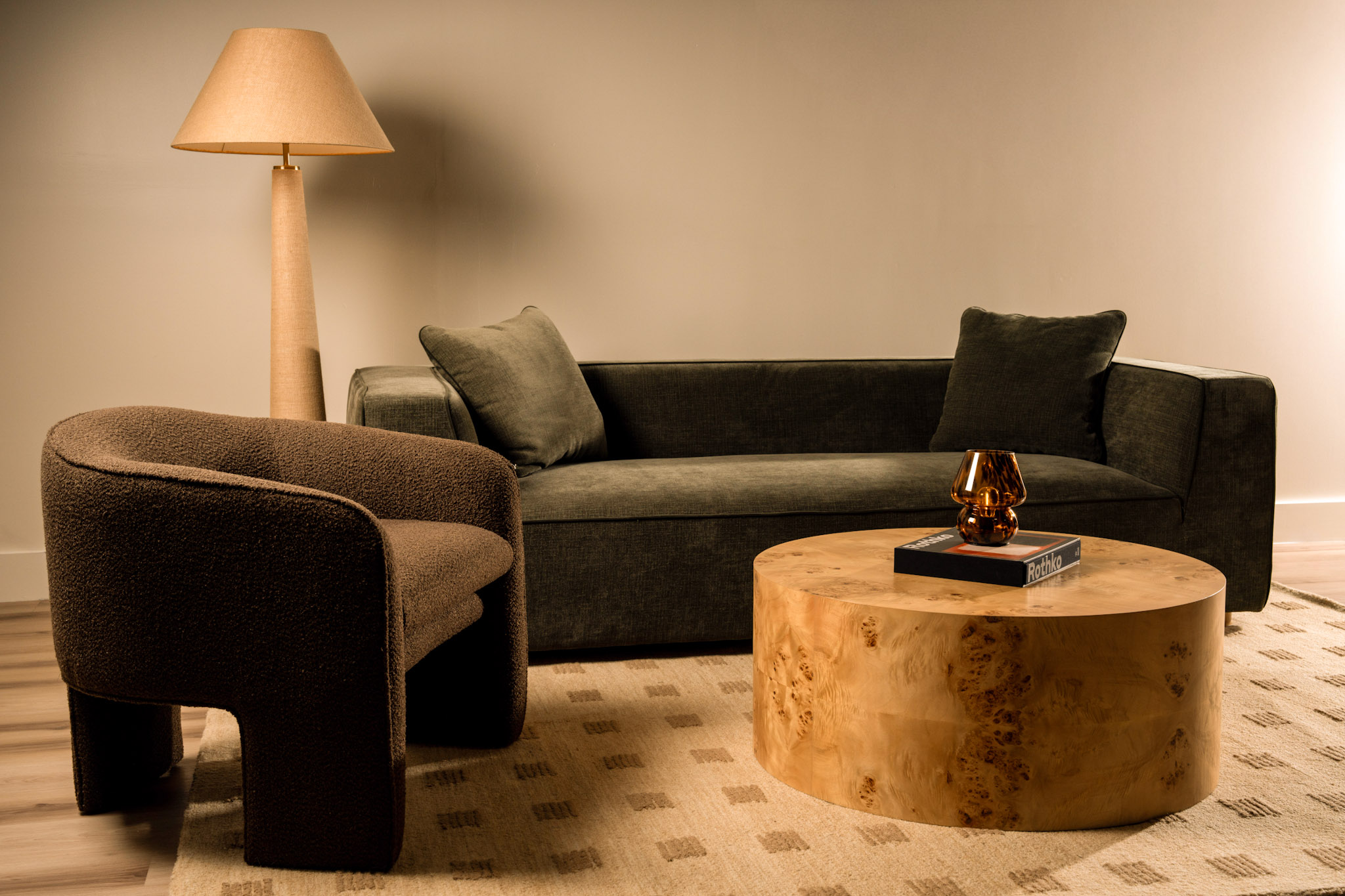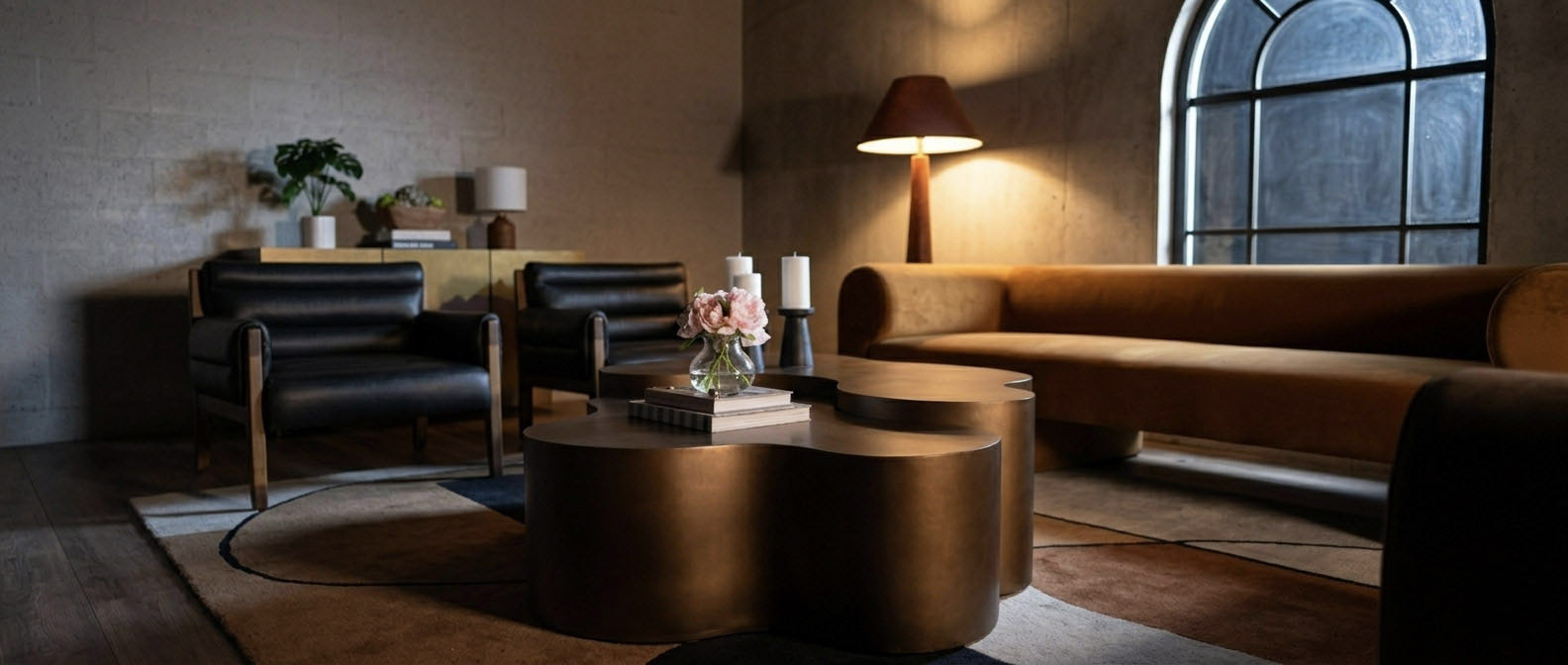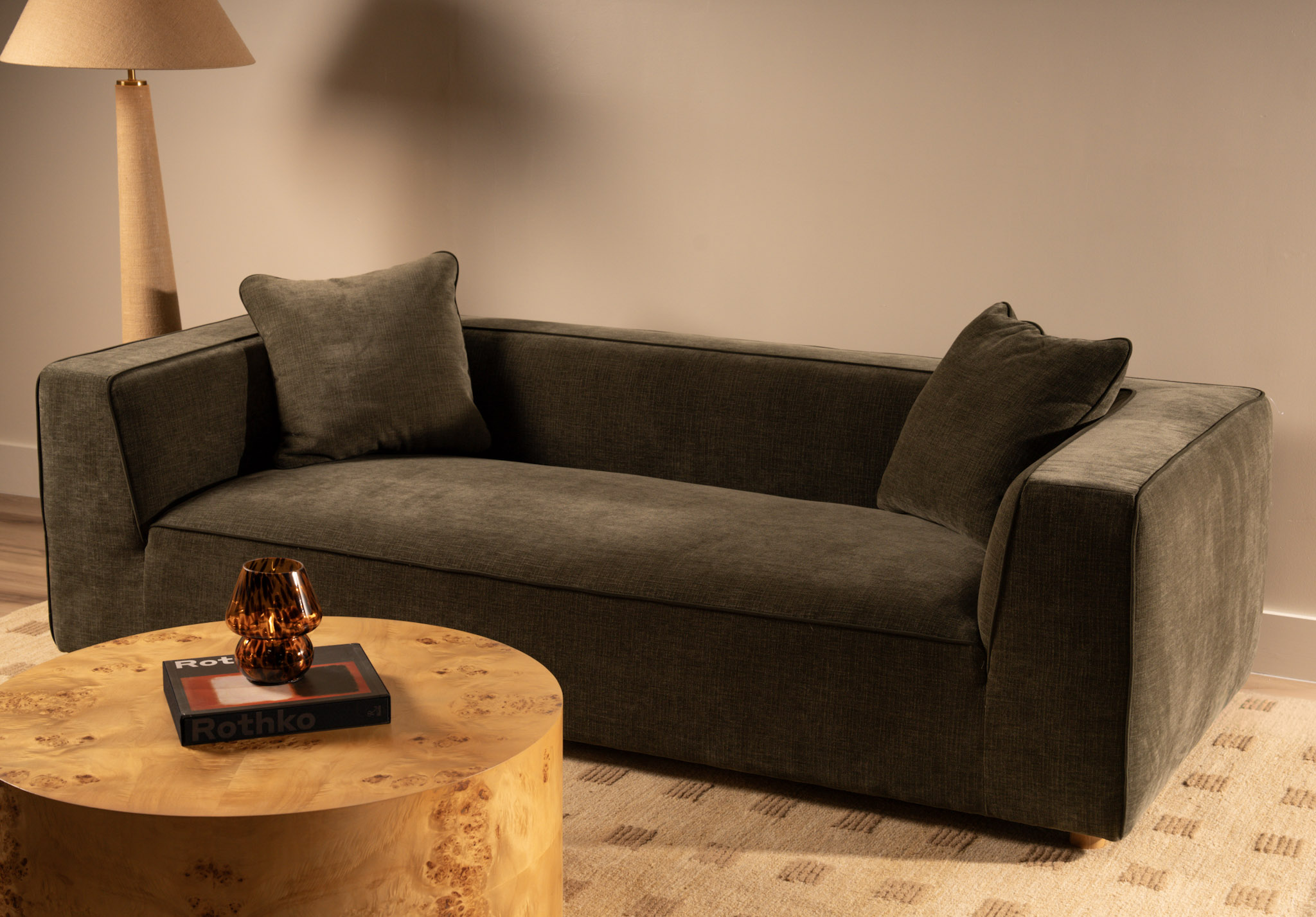
Pets are family — and they are also, let's be honest, hard on furniture. Claws, shedding, the occasional accident, muddy paws after a walk, and a cat who has decided your sofa arm is a scratching post: furnishing a home with animals is a different problem than furnishing one without. Do it wrong and you're replacing a stained, shredded couch within a year. Do it right and your furniture survives the pets and still looks good.
This is the pet-friendly furnishing playbook — the fabrics and materials that actually hold up to dogs and cats, what to avoid, layout and styling tips, and how to protect both your furniture and (if you rent) your deposit. The framework works anywhere; the climate notes are tuned for Miami, where humidity and sandy paws add their own wrinkle.
The one-line answer
Pet-proofing furniture comes down to material choices: performance fabrics or leather over delicate weaves, durable sealed surfaces over soft woods, and forgiving mid-tone colors over anything that shows every hair. Choose for your specific animal (a cat's claws and a big dog's muddy paws are different problems), protect the high-contact pieces, and you can have a home that's genuinely pet-friendly and genuinely good-looking at the same time.
Start with the fabric (it's 80% of the battle)
With pets, the single biggest decision is what your upholstery is made of. Get this right and most other problems shrink.
Best fabrics for pets:
- Performance fabrics (Sunbrella, Crypton, performance weaves). The gold standard for pet households — stain-resistant, scratch-resistant, moisture-resistant, and easy to clean (many wipe down or are machine-washable on covers). They shrug off accidents, drool, and muddy paws, and they hold up to daily animal use far better than standard upholstery.
- Leather and quality leather alternatives. Nearly indestructible for the right pet — it doesn't trap hair (a quick wipe clears it), resists odor, and cleans easily. Big caveat: a determined cat's claws can scratch real leather, and sharp dog nails can mark it. But for drool, shedding, and spills, it's excellent, and distressed or pebbled finishes hide minor marks.
- Performance velvet. Surprisingly pet-friendly — the tight pile resists claws catching, doesn't show pet hair as much as you'd expect, and the performance versions clean well.
- Microfiber (the better versions). Tight-woven microfiber resists claws and cleans easily, though cheaper versions pill — go performance-grade.
- Tight-weave, dense fabrics generally. The tighter the weave, the less a claw can catch and pull. Dense, flat weaves beat loose, nubby, or looped ones.
Fabrics to avoid with pets:
- Loose or looped weaves (bouclé, chenille, tweed). Claws catch and pull the loops — a cat can destroy bouclé fast. Beautiful, but not for clawed animals.
- Silk, velvet (non-performance), and delicate natural fibers. Stain, snag, and wear quickly.
- Untreated linen and cotton. Stain easily and hold odor and hair.
On color: mid-tone, slightly textured or patterned fabrics hide pet hair and minor marks far better than solids — and crucially, match the fabric color to your pet's fur. A black cat and a cream sofa is a lint-roller sentence; a golden retriever and a caramel-toned couch hides a world of shedding. A subtle pattern hides even more.
Match the choice to your specific pet
A cat and a Great Dane are completely different furniture challenges. Choose for the animal you actually have:
For cats (claws are the enemy): avoid loose weaves at all costs — claws catch and pull them. Leather can be scratched, so performance fabric or tight performance velvet is often the safer sofa choice. Give the cat a sanctioned scratching alternative (post or pad) right next to the furniture it would otherwise target. Rounded or tight-upholstered arms give less to grab than loose, piped ones.
For dogs (hair, paws, drool, size): prioritize cleanability and durability. Leather and performance fabrics both excel. For big or muddy dogs, washable covers and performance fabric earn their keep. Consider a sofa with a seat height and firmness your dog can get on and off easily (they will be on it) — or a designated pet-friendly chair or throw they're allowed on.
For both: think about shedding color-match, protect the pieces they actually use, and accept that the floor matters too (see rugs, below).
The other materials: floors, tables, and beds
Furniture is more than upholstery. A few material notes for the rest:
Rugs. Pets are hard on rugs — claws, accidents, shedding. The move is indoor-outdoor / polypropylene rugs, which clean with a wipe or a hose, resist stains and moisture, and don't trap odor. They're the single best pet-friendly floor choice, and they double as a great Miami-climate choice. Avoid high-pile shag (traps hair and is impossible to clean) and delicate natural fibers. A pattern hides accidents and wear between cleanings.
Case goods and tables. Durable, sealed surfaces — engineered wood with a tough finish, metal, stone, glass — resist scratches from claws and jumping pets better than soft or unsealed woods. Rounded corners are safer for bouncy dogs and kids alike.
Beds and soft goods. If your pet sleeps with you, washable duvet covers and performance bedding save you. A dedicated, appealing pet bed near (or on) the furniture gives them their own sanctioned spot.
Legs and low pieces. Cats and puppies chew and scratch exposed wood legs; metal or protected legs hold up better during the chewing stage.
Layout and styling for a pet-friendly home
Beyond materials, a few arrangement choices make daily pet life easier:
Give them their own sanctioned spots. The fastest way to protect your furniture is to give the pet somewhere better — a comfortable pet bed in the room they want to be in, a scratching post right where the cat targets the sofa, a window perch for a cat (prime Miami real estate with the light). Pets use what's appealing and available.
Create clean-up zones. A washable mat or runner by the door catches sandy, wet paws after beach or walk time — a real Miami consideration. An indoor-outdoor rug in the main traffic path takes the daily hits.
Protect the high-contact pieces. Washable throws over the spots your pet favors, arm covers where a cat scratches, a stylish pet blanket on "their" end of the sofa. These protect the furniture and wash easily.
Keep fragile and hazardous things up high. Low shelves and open surfaces are fair game for tails, paws, and curious noses — and some plants and objects are hazardous to pets. Style vulnerable and dangerous items above pet level.
Mind indoor-outdoor flow. Miami's indoor-outdoor lifestyle means pets track in sand, water, and humidity. Furniture and rugs near the balcony or entry should be the most wipeable, most forgiving pieces in the home.
Protecting your furniture — and your deposit
Whether you own or rent, a few habits keep pets from costing you:
Washable covers and throws on the high-contact pieces, laundered regularly.
Regular grooming — the less your pet sheds and the shorter its nails, the less furniture wear. A trimmed claw catches far less fabric.
Prompt accident cleanup with an enzyme cleaner (not just soap) to remove odor that would otherwise draw repeat accidents — especially important on anything absorbent.
Protect the floor with indoor-outdoor rugs over the tile most Miami units have, so paws and accidents hit something washable.
If you rent your furniture: this is a quiet advantage for pet owners. Renting performance-grade, pet-appropriate pieces means the furniture is built for wear from the start, and at the end of the term it's picked up — no worrying about reselling a pet-worn couch or eating the depreciation yourself. A good provider spec's performance materials by default, and the optional damage waiver covers normal accidents.
If you rent your apartment: protecting the floors and furniture protects your security deposit too — the same performance materials, washable layers, and prompt cleanups that save your couch save your deposit.
Common pet-furniture mistakes
Mistake 1: Bouclé or loose-weave upholstery with a cat. The number-one regret. Claws catch and pull the loops; the sofa is wrecked fast. Choose tight performance weaves or performance velvet instead.
Mistake 2: A fur-contrasting sofa color. A black-fur pet on a light sofa (or vice versa) shows every hair. Match the upholstery to the fur and add subtle pattern.
Mistake 3: Delicate or unsealed materials. Silk, non-performance velvet, untreated linen, soft unsealed woods — all wear fast under pets. Go performance and sealed.
Mistake 4: No sanctioned pet spot. If the pet has nowhere better, it uses your furniture. Give it an appealing bed, perch, or scratching post exactly where it wants to be.
Mistake 5: High-pile rugs. Shag traps hair and is nearly impossible to clean after an accident. Indoor-outdoor low-pile is the pet (and Miami) answer.
Mistake 6: Ignoring the sandy-paw problem. In Miami, beach and walk time means wet, sandy paws. Without a washable entry zone, that goes straight onto your furniture and rugs.
Mistake 7: Buying expensive furniture during the puppy/kitten stage. The chewing-and-training months are hard on everything. Performance materials — or renting pieces built for wear — bridge the stage without a costly mistake.
Frequently asked questions
What is the best fabric for pet-friendly furniture?
Performance fabrics (Sunbrella, Crypton, performance weaves) and leather lead — they resist stains, scratches, moisture, and odor and clean easily. Performance velvet and tight-weave microfiber also work well. Avoid loose or looped weaves like bouclé and chenille (claws catch and pull them), plus silk, non-performance velvet, and untreated linen. Match the fabric color to your pet's fur and add subtle pattern to hide hair.
Is leather good for homes with pets?
For dogs, generally yes — leather doesn't trap hair, resists odor, wipes clean, and handles drool and spills well, and distressed/pebbled finishes hide minor marks. The caveat is claws: a determined cat can scratch real leather, and sharp dog nails can mark it. If scratching is your main concern, a tight performance fabric or performance velvet may be the safer choice.
How do I stop my cat from scratching the sofa?
Choose a tight-weave fabric (not a loose weave a claw can catch), and give the cat a sanctioned alternative — a scratching post or pad placed right next to the spot it targets, since cats use what's appealing and available. Tight-upholstered, rounded arms give less to grab than loose, piped ones. Keep claws trimmed, and protect the favored spot with a washable arm cover while the habit redirects.
What's the best rug for pets?
Indoor-outdoor / polypropylene rugs — they clean with a wipe or hose, resist stains, moisture, and odor, and don't trap hair the way shag does. A low pile and a subtle pattern hide wear and accidents between cleanings. Avoid high-pile shag and delicate natural fibers. These are also ideal for Miami's climate, so it's a double win.
How do I keep pet hair off my furniture?
Match the upholstery color to your pet's fur (contrast is what makes hair visible), choose tight-weave performance fabrics or leather that don't grip hair, use washable throws on favored spots, and groom regularly to reduce shedding at the source. Leather and tight weaves wipe clean in seconds; loose weaves and high-pile fabrics trap hair and are the hardest to de-fur.
What furniture should I avoid with pets?
Loose and looped weaves (bouclé, chenille, tweed) with clawed animals, delicate fabrics (silk, non-performance velvet, untreated linen), high-pile shag rugs, and soft or unsealed wood legs during the chewing stage. Also avoid fur-contrasting colors and, during the puppy/kitten phase, expensive pieces you'd hate to see damaged — use performance materials or rent to bridge that stage.
Is renting furniture a good idea if I have pets?
It can be a real advantage. Rented collections are typically spec'd in performance materials built for wear from the start, the optional damage waiver covers normal accidents, and at the end of the term the furniture is picked up — so you never have to resell a pet-worn couch or absorb the depreciation yourself. For pet owners who move often or are between the puppy stage and their "forever" furniture, it's a practical fit.
How do I protect furniture from a puppy?
Use performance fabrics and washable covers, protect wood legs during the chewing stage (metal or protected legs, or deterrents), give the puppy appealing chew alternatives and its own bed, and clean accidents promptly with an enzyme cleaner to prevent repeat marking. Many owners deliberately use durable, forgiving, or rented furniture through the puppy months and upgrade once the dog is past the destructive stage.
The bottom line
A pet-friendly home isn't about ugly, indestructible furniture — it's about smart material choices. Performance fabrics or leather over delicate weaves, sealed durable surfaces over soft woods, indoor-outdoor rugs over shag, mid-tone fur-matched colors over anything that shows every hair, and sanctioned spots that give your pet somewhere better than your couch. Get the materials right and protect the high-contact pieces, and your furniture survives the claws, the shedding, and the sandy Miami paws while still looking like a home you're proud of.
And if you'd rather not gamble your own money on it — especially during the puppy-and-kitten years — renting performance-grade, pet-appropriate furniture lets the pieces take the wear, with the depreciation and the eventual replacement off your plate entirely.
Furnish a pet-friendly home the easy way
GROVI's collections are built in performance-grade, pet-appropriate materials — stain- and wear-resistant fabrics, durable sealed surfaces, and indoor-outdoor rugs suited to pets and Miami's climate alike — delivered, assembled, and set up within 48 business hours for in-stock orders across Miami-Dade, Broward, and Palm Beach. A simple deposit with an optional damage waiver for normal accidents, and pickup when your term ends. Entry-level collections from $307/month.