.jpg)
The rug is the most commonly mis-sized item in any apartment. Walk into ten rentals and eight will have a rug that's too small — a little island floating in the middle of the room with the furniture stranded around it. A correctly sized rug does the opposite: it grounds the furniture, defines the space, and makes the whole room look intentional and larger. It's one of the highest-impact, most-underrated design decisions you can make.
This is the complete guide to choosing a rug that actually works — the right size for every room (the part everyone gets wrong), the best materials for Miami's humidity and lifestyle, placement rules, and the mistakes to avoid. The framework applies anywhere, with the material and climate notes tuned for South Florida.
The one-line answer
The right rug is big enough to anchor the furniture (not float between it), made of a material that survives your life and Miami's humidity, and placed so at least the front legs of the surrounding furniture sit on it. When in doubt, size up — the single most common rug mistake, everywhere, is going too small.
The golden rule: bigger than you think
Before any room-specific sizing, internalize the one principle that fixes most rug mistakes: your rug is almost certainly too small. People consistently buy rugs one or two sizes below what the room needs, because the bigger rug looks enormous rolled up in the store and the smaller one is cheaper. In the room, the opposite is true — the bigger rug makes the space look larger and more finished, and the small one makes it look cramped and unresolved.
The test: a rug should feel like it's defining and containing the furniture arrangement, not sitting inside it like a placemat. If your coffee table sits on a rug but the sofa's front legs are on bare floor by a foot, the rug is too small.
When you're between two sizes, choose the larger one. It's the safest rule in rug-buying.
Living room rug sizes
The living room is where sizing matters most and where people most often go wrong. Three valid approaches, best to acceptable:
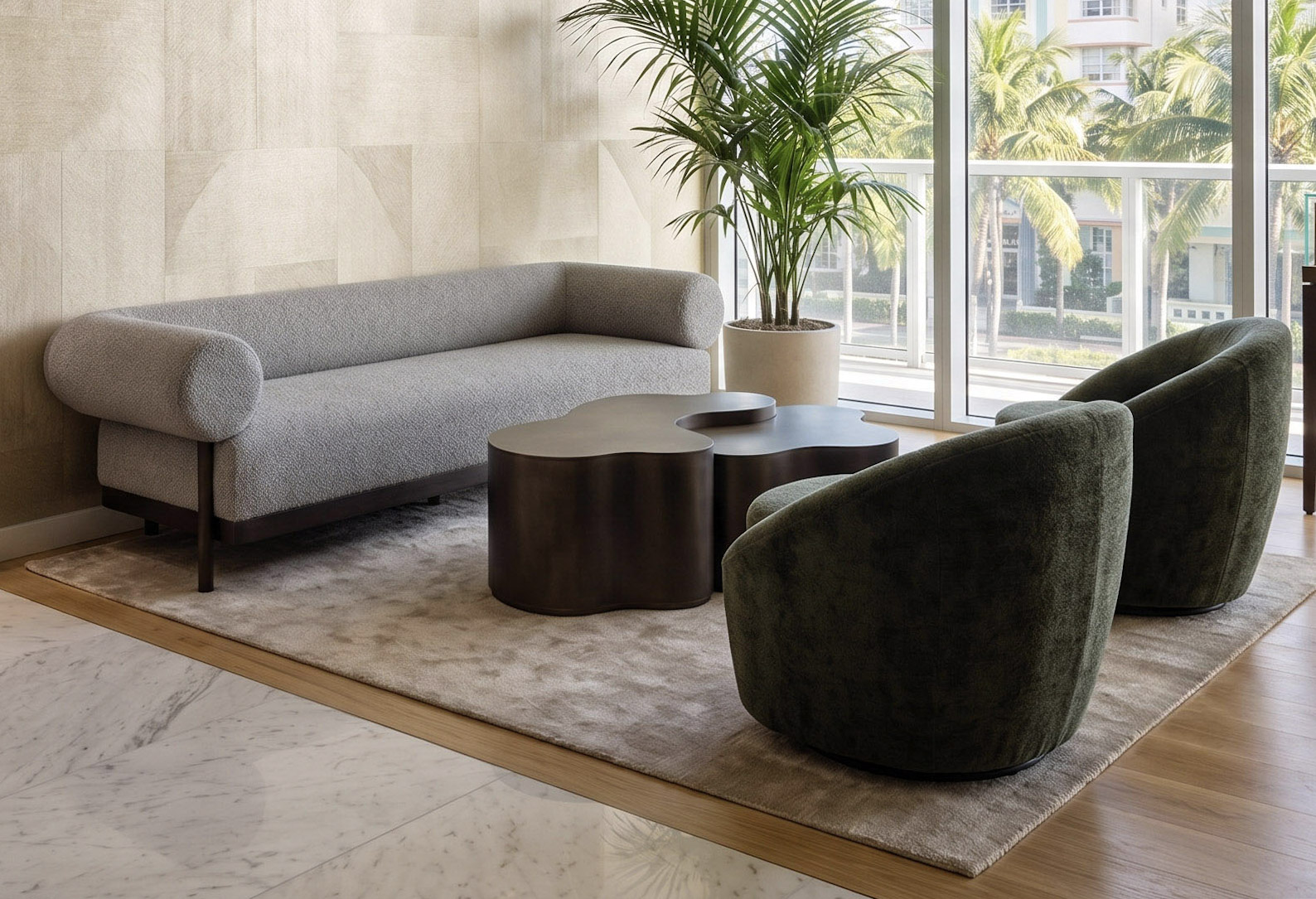
Best — all furniture legs on the rug. The rug is large enough that the sofa, chairs, and coffee table all sit entirely on it, with the rug extending about 8 inches beyond the furniture on all sides. This is the most luxurious, most spacious-looking option. It usually means an 8x10 rug for a standard living room, or 9x12+ for a large one.
Very good — front legs on the rug. The front legs of the sofa and chairs sit on the rug; the back legs are on the floor. This visually connects all the furniture and defines the seating zone, while using a slightly smaller (and cheaper) rug. An 8x10 is the common size here for most living rooms; 6x9 for smaller ones.
Acceptable — the "floating" coffee-table island (only in tiny spaces). All furniture is off the rug and only the coffee table sits on it. This works only in genuinely tiny studios where nothing larger fits. Everywhere else, it reads as the classic too-small mistake.
Quick living room size guide:
- Small living room / studio zone: 5x8 or 6x9
- Standard living room: 8x10 (the most common right answer)
- Large living room: 9x12 or larger
- Open-plan great room: 9x12+, sized to define the living zone specifically
The rule of thumb: leave 8–24 inches of bare floor between the rug edge and the walls, so the rug frames the room rather than wall-to-wall carpeting it. In an open plan, the rug's job is to define the living zone, so size it to the seating group, not the whole room.
Dining room rug sizes
The dining rug has one job: stay under the chairs even when they're pulled out. Get this wrong and chairs catch on the edge every time someone sits down.
The rule: the rug should extend at least 24 inches beyond the table edge on all sides — enough that a chair stays fully on the rug when pulled out to sit. Measure your table and add 48 inches to each dimension (24 inches per side) to find your minimum rug size.
Dining rug size guide:
- 4-person table (48"): 6x9 rug minimum
- 6-person table (60–72"): 8x10 rug
- 8-person table (78–96"): 9x12 rug or larger
Shape follows the table: a rectangular table takes a rectangular rug; a round table looks best on a round rug (or a square one). Match the rug shape to the table shape.
Material note for dining: dining rugs take spills and chair traffic, so a flat-weave, indoor-outdoor, or performance rug that cleans easily beats a deep plush pile here.
Bedroom rug sizes
The bedroom rug's job is to give you something soft underfoot when you get out of bed, and to anchor the bed within the room. Two approaches:
Best — one large rug under the bed. A rug that extends about 18–24 inches beyond the bed on the sides and foot (the head can tuck under the nightstands or stop at the bed). This frames the bed and gives soft landing on both sides. Queen bed: 8x10 rug. King bed: 9x12 rug.
Alternative — runners on each side. Two runners flanking the bed, or one runner at the foot. Cheaper and works in tight rooms, though less luxurious than one large rug.
Placement: position the rug so roughly the bottom two-thirds of the bed sits on it, leaving generous rug on both sides and the foot. Don't center a too-small rug under the middle of the bed — it disappears.
The best rug materials for Miami's climate
Material is where Miami changes the decision. Humidity, the indoor-outdoor lifestyle, sand, and spills all argue for practicality — but you don't have to sacrifice looks.
Best for Miami apartments:
- Indoor-outdoor / polypropylene rugs. The unsung hero of Miami rugs — they resist moisture, mold, mildew, stains, and fading, clean with a hose or a wipe, and modern versions look genuinely good (many mimic wool or jute convincingly). Ideal for humidity, balconies, dining rooms, and pet-and-kid households.
- Natural fibers — jute and sisal. On-trend, textural, and perfect for the coastal-modern and tropical Miami looks. Jute is softer; sisal is more durable. Both suit the warm-minimalist aesthetic. Note: they can be harder to spot-clean, so they're better in lower-spill zones.
- Performance / synthetic-blend rugs. Engineered for stain resistance and durability, in every style. A safe, low-maintenance choice.
- Wool (with a caveat). Beautiful, soft, and durable, and it does resist stains naturally — but in Miami's humidity, natural wool needs good airflow and can be prone to mildew in damp, low-ventilation spots. Fine in well-conditioned interiors; riskier in humid, less-ventilated units.
Be cautious with in Miami:
- Silk and viscose. Gorgeous but delicate — they stain easily, struggle with humidity, and don't hold up to real life. Save for low-traffic, display-only spots, if at all.
- Deep shag in humid, sandy, high-traffic areas. Traps sand, dust, and moisture, and is hard to clean. Fine in a bedroom; frustrating in a beach-condo living room.
On pile height: low-pile and flat-weave rugs are easier to clean, better for dining and high-traffic zones, and let doors and chairs move freely. Medium-pile adds softness for living rooms and bedrooms. Reserve high-pile/shag for low-traffic comfort zones.
Color, pattern, and the Miami palette
A few styling principles, tuned for Miami light:
Neutral and textural is the safe, current move. Warm neutrals — cream, sand, oatmeal, warm greige — in a natural or subtly textured weave suit the 2026 warm-minimalist look, hide wear, photograph well, and let other pieces carry the color. This is the default that works in almost any Miami apartment.
Pattern hides wear and adds life. If you have pets, kids, or a high-traffic space, a subtly patterned or multi-tonal rug hides crumbs, stains, and sand far better than a solid — a practical choice dressed as a style choice.
Let the rug tie the room together. A rug can pull in the room's accent color (from the pillows, the art, the palette) in small amounts, or stay neutral and let those elements pop. Either works; just don't let the rug fight the palette.
Mind Miami's light. The intense sun fades rugs over time — another reason fade-resistant indoor-outdoor and synthetic materials earn their place in sun-flooded units.
Rug placement and layering rules
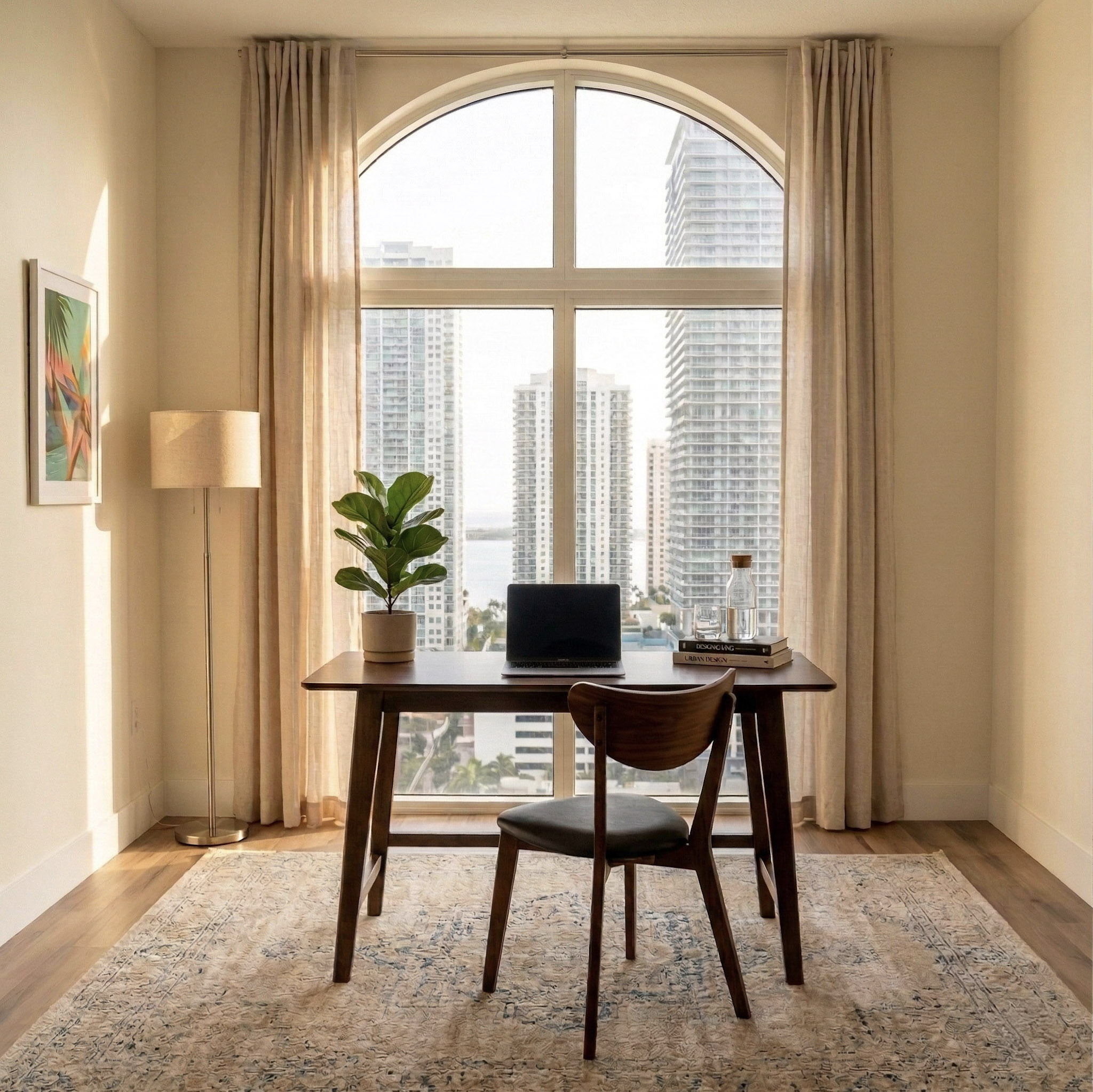
Anchor, don't float. The recurring theme: furniture should sit on the rug (all legs, or at least front legs), not around it. This is the single biggest driver of a room looking finished.
Keep it straight and centered. Align the rug with the main furniture piece or the architecture of the room. A crooked or off-center rug quietly makes a room feel unresolved.
Leave a consistent floor border. Aim for a roughly even margin of bare floor between the rug and the walls (8–24 inches) — it frames the room. The rug shouldn't run wall to wall like carpet, nor float tiny in the center.
Layering (optional, on-trend). A smaller patterned or textured rug layered over a larger neutral one (often a jute base) adds depth and warmth — a popular move in the tropical and warm-minimalist Miami looks. Keep the base neutral and the top layer the accent.
Use a rug pad. Especially over Miami's ubiquitous tile floors, a rug pad prevents slipping, adds cushioning, protects the rug, and helps with airflow underneath (which matters for humidity). It's a small cost that meaningfully extends a rug's life and safety.
Common rug mistakes
Mistake 1: Too small. The universal error. The rug floats, the furniture strands, the room looks cramped. Size up.
Mistake 2: Furniture entirely off the rug. In anything bigger than a tiny studio, at least the front legs of the sofa and chairs should be on the rug. All-off reads as too-small.
Mistake 3: A dining rug that's too small for the chairs. If chairs catch on the edge when pulled out, the rug is too small. Add 24 inches beyond the table on every side.
Mistake 4: Delicate materials in a humid, high-traffic life. Silk, viscose, and untreated deep pile don't survive Miami's humidity, sand, and real-life spills. Choose indoor-outdoor, performance, or natural jute/sisal.
Mistake 5: Skipping the rug pad. On tile especially, no pad means a sliding, bunching, fast-wearing rug. Always use one.
Mistake 6: A rug that fights the palette. A busy, high-contrast rug in a calm warm-minimalist room fights everything else. Let the rug either stay neutral or carry the accent — not compete.
Mistake 7: One rug trying to cover an open plan. In a great room, use the rug to define the living zone specifically, sized to the seating group — not one giant rug trying to cover living and dining at once.
Frequently asked questions
What size rug do I need for my living room?
For most living rooms, an 8x10 rug is the right answer — large enough that at least the front legs of the sofa and chairs sit on it, defining the seating zone. Small rooms take a 6x9; large rooms need 9x12 or bigger. The key rule: the rug should anchor the furniture, not float between it. When between two sizes, size up.
Should all furniture legs be on the rug?
Ideally, yes — all legs on the rug, with about 8 inches of rug extending beyond the furniture, is the most spacious-looking option. But front-legs-on is a very good and more economical alternative that still visually connects the furniture. Only in a tiny studio should the furniture sit entirely off the rug.
What size rug goes under a dining table?
One that extends at least 24 inches beyond the table on all sides, so chairs stay fully on the rug when pulled out. Add 48 inches to each table dimension to find your minimum: a 4-person table needs about a 6x9, a 6-person table an 8x10, and an 8-person table a 9x12.
What's the best rug material for a humid climate like Miami's?
Indoor-outdoor (polypropylene) rugs are the top choice — they resist moisture, mold, stains, and fading, clean easily, and look good. Natural jute and sisal suit the coastal and warm-minimalist looks. Performance synthetics are a safe, durable default. Be cautious with silk, viscose, and deep untreated pile, which struggle with humidity and stains.
How much bigger than the furniture should a rug be?
For a living room where all legs sit on it, the rug should extend about 8 inches beyond the furniture on all sides. For a dining rug, extend 24 inches beyond the table for chair clearance. For a bedroom, extend 18–24 inches beyond the bed on the sides and foot. And leave 8–24 inches of bare floor between the rug and the walls.
Do I need a rug pad?
Yes, especially over tile floors, which most Miami apartments have. A rug pad stops slipping, adds cushioning, protects the rug from wear, and improves airflow underneath (which helps in a humid climate). It's inexpensive and meaningfully extends a rug's life and safety.
Can I put a rug over tile?
Absolutely — and you should. Most Miami apartments have tile floors, and a rug warms them instantly, adds softness and sound absorption, and defines zones. Use a rug pad underneath to prevent sliding on the smooth surface. A rug over tile is one of the fastest ways to make a hard-surfaced Miami unit feel like a home.
What color rug should I choose?
A warm neutral — cream, sand, oatmeal, or warm greige — in a natural or textural weave is the safe, current, versatile choice: it hides wear, photographs well, suits Miami's warm light, and lets other pieces carry the color. If you have pets or kids or high traffic, a subtle pattern hides wear even better. Bold rugs can work but should carry the room's accent rather than fight the palette.
The bottom line
A rug is a sizing decision first and a style decision second. Get the size right — big enough to anchor the furniture, with legs on it, sized to the room — and even a simple neutral rug makes the space look finished and larger. Get the size wrong, and the most beautiful rug in the world still reads as a mistake. In Miami, layer one more decision on top: choose a material that shrugs off humidity, sand, and spills — indoor-outdoor, performance, or natural jute — so the rug survives the climate and the lifestyle. Size up, anchor the furniture, pick a climate-smart material, and use a pad. That's the whole game.
Furnish your Miami apartment, rug included
GROVI's design-led collections include correctly-sized, climate-appropriate rugs coordinated with the rest of each room — anchoring the sofa, defining the dining zone, and warming Miami's tile floors. Delivered, installed, and styled within 48 business hours for in-stock orders. Entry-level collections from $307/month; design-led from $400/month.
.jpg)